Adoption baseline
A repeatable view of where adoption is working, where it is stuck and what has to change first.
Licences are live. The training is complete. The dashboards show activity, but daily work still runs much as it did before.
Logins show that people opened the tool. They do not show whether a workflow changed, better work shipped or new capacity was created.
Another round of training will not fix a system that gives people no ownership, room or reason to work differently.
The question is whether the work changed, and what the organisation did with the value it created.
Four questions turn adoption into changed work. Each one builds on the answer before it.
We start with recurring work where better speed, quality or capacity would make a meaningful difference, not with tasks that make a good demonstration.
We build with people inside the team and give every change a clear owner. The new way of working belongs to your organisation before H3 steps back.
We measure what people do and what they ship, not simply whether they logged in. The Ownership Metric tracks the share of AI-enabled work the team completes without H3.
We decide how the freed time or capacity will be used: to improve quality, serve more customers, reduce cost or create new value.
Four things your team can use, repeat and extend after H3 steps back.
A repeatable view of where adoption is working, where it is stuck and what has to change first.
One recurring piece of work in which AI has become the team’s normal way of working, not an extra step.
Named internal owners and a metric showing how much AI-enabled work the team ships without us.
A clear decision, owned by a person, about how the organisation will use the time or capacity the change creates.
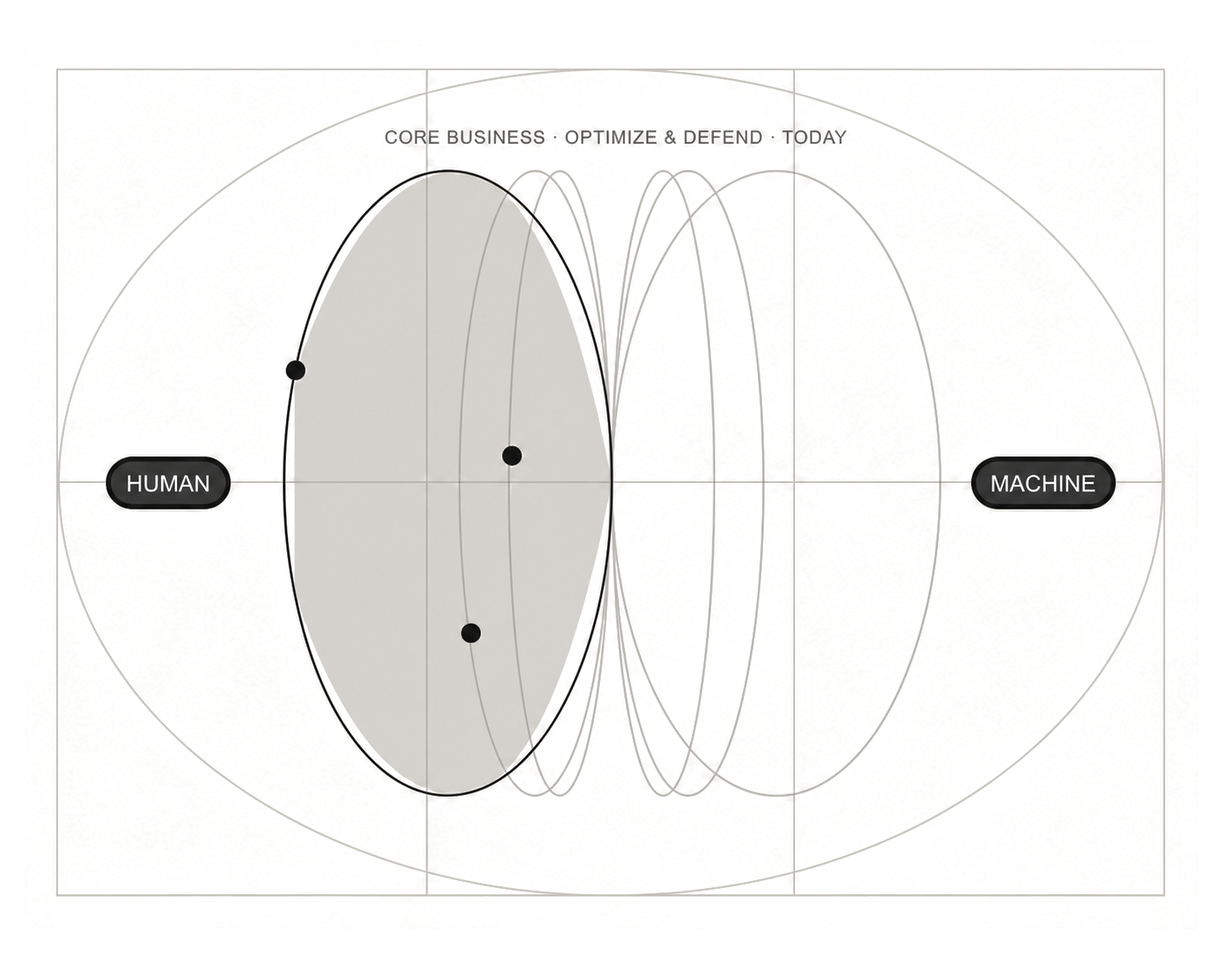
Changing daily work is the first horizon. Sometimes the process underneath that work must also be rebuilt. Sometimes the new capacity needs to become a new service, proposition or source of revenue. The three horizons can move at different speeds, but they cannot be treated as separate systems.
The linked case describes one programme. We present it as that, and nothing larger.
Accountancy firm · adoption
Adoption survives when a team has a repeatable habit, a named owner, and a before-and-after number on one process. Licences buy none of that.
The five that come up before anyone talks about scope.
Logins show that someone opened a tool. They do not show that a workflow changed, that better work shipped or that capacity was created. We steer on the Ownership Metric instead: the share of AI-enabled work the team completes without us.
Training ends at capability. We start at the work: which recurring task is worth changing, who owns the new way of doing it, whether the change held after we stepped back, and what the business does with the time it frees.
One cycle changes one recurring workflow and ends with a measurement against the baseline set before it started. Weeks rather than quarters, and it ends in a decision.
It evaporates unless someone owns it. Before the cycle starts we decide what the released capacity is for—better quality, more customers, lower cost or new value—and assign it to a person by name. That single question separates adoption that shows up in results from adoption that does not.
Not to start. The first step runs on interviews and a screen-share, so it can begin before supplier onboarding is complete. Your own people make the changes inside your own environment.
One accountable sponsor, the people who do the recurring work, and whoever will own the freed capacity afterwards. Without that last person the cycle produces time and nothing else.
Every engagement begins with one defined result, a clear timeframe and a decision at the end. Four ways to start, from a two-day workshop to a twelve-week roadmap.
See how we startBring us one AI initiative that people can use but that has not yet changed the work or produced the expected return. We will help you identify what is holding it back and what needs to change first.